
Makeup is often considered a beauty tool, but modern psychology research suggests that it also plays a significant role in emotional well-being, self-confidence, and mental health.
Studies in cosmetic psychology and behavioral science indicate that personal grooming routines such as skincare and makeup can trigger dopamine and serotonin responses, which are linked to improved mood and motivation.
In fact, beauty routines have increasingly become part of therapeutic self-care practices, especially during stressful times.
Table of Contents
Psychological Science Behind Makeup and Mental Health
Research in cosmetic psychology identifies three main mechanisms through which makeup improves mental health.
- Self-Perception Theory
When people perceive themselves as more attractive, their confidence and social engagement increase.
- Behavioral Activation
Simple routines like applying makeup can act as daily rituals that combat depression and anxiety.
- Sensory Therapy
Textures, scents, and colors stimulate the brain’s limbic system, which regulates emotions.
Global Beauty Industry and Mental Wellness Statistics
| Statistic | Data |
| Global cosmetics market value (2025) | $430 Billion |
| Expected market value (2030) | $580 Billion |
| Consumers who say beauty routines improve mood | 72% |
| Women using makeup for confidence boost | 64% |
| Consumers linking skincare to mental wellness | 59% |
| People who treat makeup as self-care | 54% |
Mental Health Benefits of Makeup
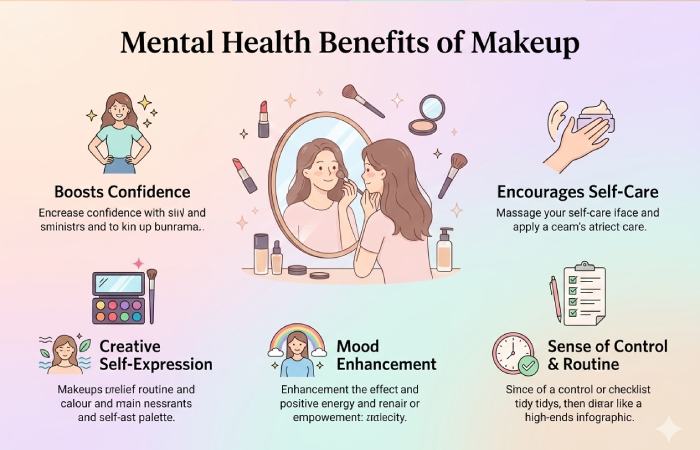
- Boosts Self-Confidence
- Makeup enhances facial features.
- Improved appearance leads to higher self-esteem.
- People feel more confident in social and professional settings.
- Reduces Stress
The repetitive act of applying makeup can be calming.
Benefits include:
- mindfulness
- relaxation
- reduced anxiety
- Encourages Positive Self-Talk
Looking good often encourages positive internal dialogue such as:
- “I feel confident today”
- “I look prepared”
- “I can face the day”
- Supports Routine and Discipline
Beauty routines create a structured morning ritual, which psychologists say helps reduce mental chaos.
Makeup Products That Improve Mood
| Makeup Product | Category | Mood Benefit | Average Price | Reviews | Resource Link |
| FENTY BEAUTY Killawatt Freestyle Highlighter | Highlighter | Creates glowing skin which boosts confidence and self-perception | ₹4,150 | 4.7 / 5 (19k+ reviews) | Sephora / Fenty Beauty |
| Maybelline Fit Me Foundation | Foundation | Smooths skin tone, improves appearance and mood | ₹487 | 4.5 / 5 | Blinkit / Maybelline |
| M.A.C Macximal Matte Mini Lipstick | Lipstick | Bright lip colors trigger positive emotions and confidence | ₹1,150 – ₹2,550 | 4.6 / 5 | MAC Cosmetics |
| NARS Orgasm Blush Mini | Blush | Gives a healthy flushed look that improves self-image | ₹1,800 | 4.7 / 5 (15k+ reviews) | Nykaa / NARS |
| Urban Decay Naked Eyeshadow Palette | Eyeshadow | Encourages creativity and self-expression | ₹7,000 | 4.7 / 5 (59k+ reviews) | Urban Decay |
| e.l.f. Halo Glow Liquid Filter | Glow Enhancer | Radiant skin effect improves self-confidence | ₹875 | 4.4 / 5 | Nykaa |
| Charlotte Tilbury Hollywood Flawless Filter | Skin Glow Base | Luminous skin boosts mood and self-esteem | ₹2,000+ | 4.5 / 5 (18k+ reviews) | Nykaa / Charlotte Tilbury |
| MARS Illuminati Face Highlighter | Liquid Highlighter | Affordable glow product improving appearance satisfaction | ₹305 | 4.5 / 5 | Myntra |
| Swiss Beauty Pearl Illuminator Makeup Base | Makeup Base | Enhances brightness and skin glow | ₹263 | 4.3 / 5 | Amazon |
| MAC Mini Strobe Cream | Strobe Cream | Creates luminous skin which improves self-perception | ₹1,500 | 4.6 / 5 | Nykaa |
Makeup and Mental Health Routine (Step-by-Step)
Step 1: Create a Calm Beauty Space
Your makeup area should be:
- clean
- organized
- well-lit
Step 2: Start with Skincare
A proper skincare base improves mood and results.
Routine:
- Cleanser
- Toner
- Serum
- Moisturizer
- Sunscreen
Step 3: Apply Makeup Slowly
Turn the process into a mindfulness ritual.
Step 4: Focus on Features You Love
Highlighting your favorite features builds self-acceptance.
Makeup Techniques That Improve Self-Image
| Technique | Effect on Mood |
| Highlighter glow | Radiance improves confidence |
| Soft contour | Balanced facial structure |
| Bright lipstick | Energy and positivity |
| Defined brows | Structured appearance |
| Natural base | Comfort and authenticity |
Makeup and Color Psychology
Color psychology plays a huge role in emotional impact.
| Makeup Color | Psychological Effect |
| Red | Power and confidence |
| Pink | Warmth and kindness |
| Coral | Happiness |
| Gold | Luxury and positivity |
| Nude | Calm and elegance |
Countries Where Makeup Is Most Linked to Self-Care
United States – Makeup as Confidence & Lifestyle Self-Care
| Product Category | Popular Brands | Average Price (USD) | Self-Care Trend | Resource Link |
| Foundation | Fenty Beauty, Estée Lauder | $35 – $60 | Flawless skin boosts confidence | https://www.sephora.com |
| Lipstick | MAC, Rare Beauty | $20 – $40 | Color therapy & mood enhancement | https://www.maccosmetics.com |
| Highlighter | Fenty Beauty, Tarte | $30 – $45 | Glow aesthetics linked to self-confidence | https://www.ulta.com |
| Eyeshadow Palette | Urban Decay, Huda Beauty | $45 – $70 | Creative expression | https://www.sephora.com |
| Skincare Makeup Hybrid | IT Cosmetics | $35 – $55 | Wellness-focused beauty routines | https://www.itcosmetics.com |
Average monthly beauty spending: $90 – $150
South Korea – Skincare-First Self-Care Culture
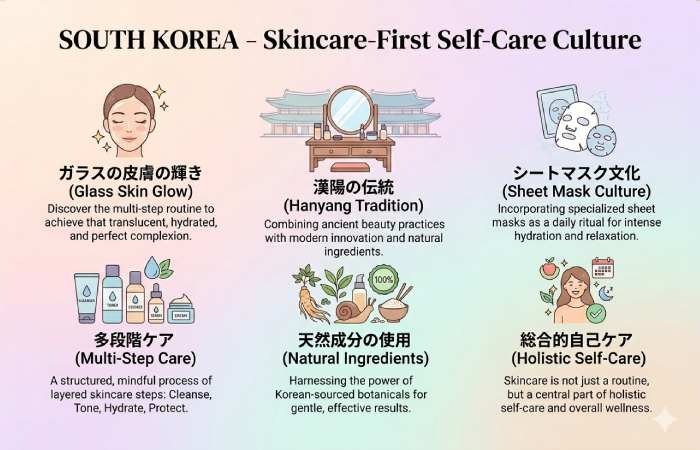
South Korea is considered one of the highest per-capita beauty spending countries, with people spending around $493 per year on beauty products.
| Product Category | Popular Brands | Average Price (USD) | Self-Care Trend | Resource Link |
| Cushion Foundation | Laneige, Hera | $25 – $45 | Lightweight everyday beauty | https://www.laneige.com |
| Lip Tint | Peripera, Etude House | $10 – $20 | Natural youthful appearance | https://www.etude.com |
| Glass Skin Highlighter | Innisfree, Clio | $18 – $35 | “Glass skin” glow trend | https://www.innisfree.com |
| BB Cream | Missha, Dr. Jart+ | $15 – $30 | Skincare + makeup hybrid | https://www.missha.com |
| Tone-Up Cream | Skin79, Dr. Jart | $20 – $40 | Brightening self-care routine | https://www.stylekorean.com |
Average monthly beauty spending: $40 – $70
France – Luxury Beauty & Natural Elegance
| Product Category | Popular Brands | Average Price (EUR) | Self-Care Trend | Resource Link |
| Foundation | Dior, Chanel | €50 – €75 | Natural luxury beauty | https://www.dior.com |
| Lipstick | Chanel, Yves Saint Laurent | €40 – €60 | Elegant classic makeup | https://www.chanel.com |
| Highlighter | Guerlain, Dior | €45 – €65 | Subtle radiant skin | https://www.guerlain.com |
| Mascara | Lancôme, Clarins | €30 – €45 | Minimalist eye enhancement | https://www.lancome.com |
| Blush | Givenchy, Chanel | €40 – €60 | Healthy glow look | https://www.givenchybeauty.com |
Average monthly beauty spending: €80 – €120
Japan – Minimalist & Skin-Health Beauty
| Product Category | Popular Brands | Average Price (USD) | Self-Care Trend | Resource Link |
| Cushion/Foundation | Shiseido, SK-II | $35 – $70 | Skin health focus | https://www.shiseido.com |
| Lip Balm Tint | DHC, Canmake | $8 – $20 | Natural beauty look | https://www.dhc.co.jp |
| Highlighter | Canmake, Cezanne | $10 – $25 | Subtle glow | https://www.canmake.com |
| Eyeliner | KATE Tokyo | $15 – $30 | Soft eye definition | https://www.kanebo-global.com |
| Skincare Makeup | Hada Labo | $15 – $35 | Hydration-based beauty | https://www.hadalabo.com |
Average monthly beauty spending: $60 – $100
India – Affordable Self-Care Beauty Culture
India’s cosmetics market is rapidly expanding as rising incomes and social media influence increase beauty spending.
| Product Category | Popular Brands | Average Price (INR) | Self-Care Trend | Resource Link |
| Foundation | Lakmé, Maybelline | ₹350 – ₹900 | Everyday makeup routines | https://www.nykaa.com |
| Lipstick | Sugar Cosmetics, Lakmé | ₹300 – ₹900 | Bold expression & confidence | https://www.sugarcosmetics.com |
| Highlighter | Swiss Beauty, Kay Beauty | ₹250 – ₹800 | Glow makeup trend | https://www.myntra.com |
| Kajal / Eyeliner | Lakmé, Colorbar | ₹200 – ₹700 | Traditional beauty staple | https://www.lakmeindia.com |
| Compact Powder | Maybelline, Faces Canada | ₹250 – ₹700 | Oil-control self-care routine | https://www.amazon.in |
Average monthly beauty spending: ₹1,000 – ₹3,000
Emerging Trend: Makeup Therapy
Makeup Therapy is an emerging wellness trend where cosmetics are used not only for beauty but also as a psychological self-care tool to improve mood, confidence, and emotional well-being. In recent years, psychologists, dermatologists, and beauty experts have started recognizing the therapeutic benefits of makeup routines as part of holistic wellness practices.
Benefits of Makeup Therapy
Research and wellness experts identify several key benefits.
Emotional Benefits
- Boosts self-confidence
- Reduces anxiety and stress
- Encourages positive self-image
Psychological Benefits
- Improves mood regulation
- Supports emotional expression
- Creates a sense of accomplishment
Social Benefits
- Enhances social confidence
- Improves professional presence
- Encourages positive interactions
Risks: When Makeup Becomes Unhealthy
While makeup can improve mental health, dependency can cause problems.
Warning signs include:
- anxiety without makeup
- compulsive mirror checking
- body dysmorphia
- excessive spending
Healthy mindset:
Makeup should enhance confidence, not define it.
Future Trends: Beauty and Mental Health (2026-2030)
| Trend | Description |
| Wellness beauty brands | Cosmetics designed for emotional wellness |
| Aromatherapy makeup | Fragrance-based mood boosters |
| AI beauty personalization | Mental health-friendly recommendations |
| Sustainable cosmetics | Ethical beauty improves emotional satisfaction |
| Skin-first makeup | Minimalist mental wellness trend |
Practical Tips to Use Makeup for Mental Wellness
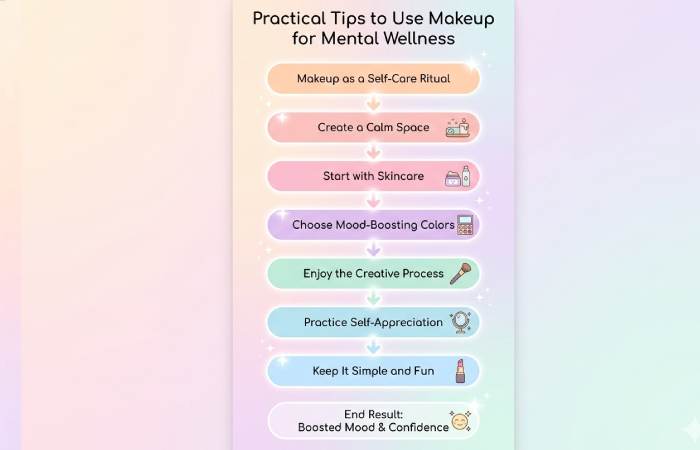
Using makeup intentionally can transform it from a simple beauty activity into a powerful self-care ritual. When practiced mindfully, a makeup routine can help reduce stress, boost confidence, and improve emotional balance.
Below are practical, research-based tips to help you use makeup in a way that supports your mental well-being.
Turn Your Makeup Routine into a Mindfulness Ritual
Instead of rushing through your routine, treat makeup as a moment of calm and self-connection.
How to practice this:
- Sit in a quiet, comfortable place
- Take deep breaths while applying each product
- Focus on the textures, colors, and scents
- Avoid distractions like phones or TV
Benefits:
- Reduces stress
- Encourages mindfulness
- Improves emotional focus
Create a Dedicated Self-Care Beauty Space
Your environment affects your mood. A well-organized makeup space can make the routine more enjoyable.
Tips:
- Use good lighting
- Keep your tools clean and organized
- Add relaxing elements like candles or soft music
- Store your favorite products within easy reach
A pleasant space can make your beauty routine feel like personal therapy time.
- Focus on Enhancing Features You Love
Instead of trying to “fix flaws,” use makeup to highlight the features you appreciate most.
Examples:
- Highlighter for cheekbones
- Mascara for expressive eyes
- Lipstick to brighten your smile
This approach encourages self-acceptance and positive self-image.
Use Color Psychology to Boost Mood
Colors can influence emotions and energy levels.
| Makeup Color | Emotional Effect |
| Red lipstick | Confidence and empowerment |
| Pink blush | Warmth and positivity |
| Gold highlighter | Radiance and luxury |
| Coral lipstick | Happiness and enthusiasm |
| Nude tones | Calm and balance |
Choosing colors intentionally can improve your emotional state throughout the day.
Keep Your Routine Simple and Enjoyable
A complicated routine can create pressure instead of relaxation.
A simple routine might include:
- Moisturizer or BB cream
- Light foundation or concealer
- Mascara
- Blush or highlighter
- Lip balm or lipstick
A 5-minute routine can still boost mood and confidence.
Experiment with Creative Expression
Makeup can be a form of artistic expression.
Try:
- bold eyeshadow looks
- graphic eyeliner
- colorful lip shades
- seasonal makeup trends
Creative experimentation stimulates the brain and can increase dopamine levels, improving mood.
Avoid Social Media Comparison
Comparing yourself to filtered images online can negatively affect mental health.
Healthy mindset tips:
- Remember many beauty photos are edited
- Focus on your own unique features
- Use makeup for personal enjoyment, not validation
Confidence grows when makeup becomes self-expression rather than comparison.
Maintain Healthy Skin Care Alongside Makeup
Healthy skin improves both appearance and emotional confidence.
Basic skincare routine:
| Step | Purpose |
| Cleanser | Removes dirt and oil |
| Moisturizer | Keeps skin hydrated |
| Sunscreen | Protects against damage |
| Serum | Targets specific concerns |
Good skincare makes makeup look better and reduces appearance-related stress.
Invest in Products That Make You Feel Good
Choose products that you enjoy using.
Things to consider:
- pleasant scent
- smooth texture
- long-lasting quality
- suitable for your skin type
Using products you love can make the routine feel like a reward rather than a chore.
Balance Makeup with Natural Confidence
Makeup should enhance confidence, not replace it.
Healthy balance includes:
- feeling comfortable both with and without makeup
- recognizing your natural beauty
- using makeup as a tool for self-care, not a necessity
This balance ensures makeup supports mental wellness rather than creating dependence.
Conclusion: makeup can boost mental health
it is an essential and effective tool. As Conde puts it, «self-care reverts to emotional well-being, at all levels, how I talk to myself, if I can forgive myself and be compassionate with myself and how I take care of my body. As long as removing it does not generate anxiety and insecurity problems, everyone has to find their aesthetic and emotional well-being in the way they like.