
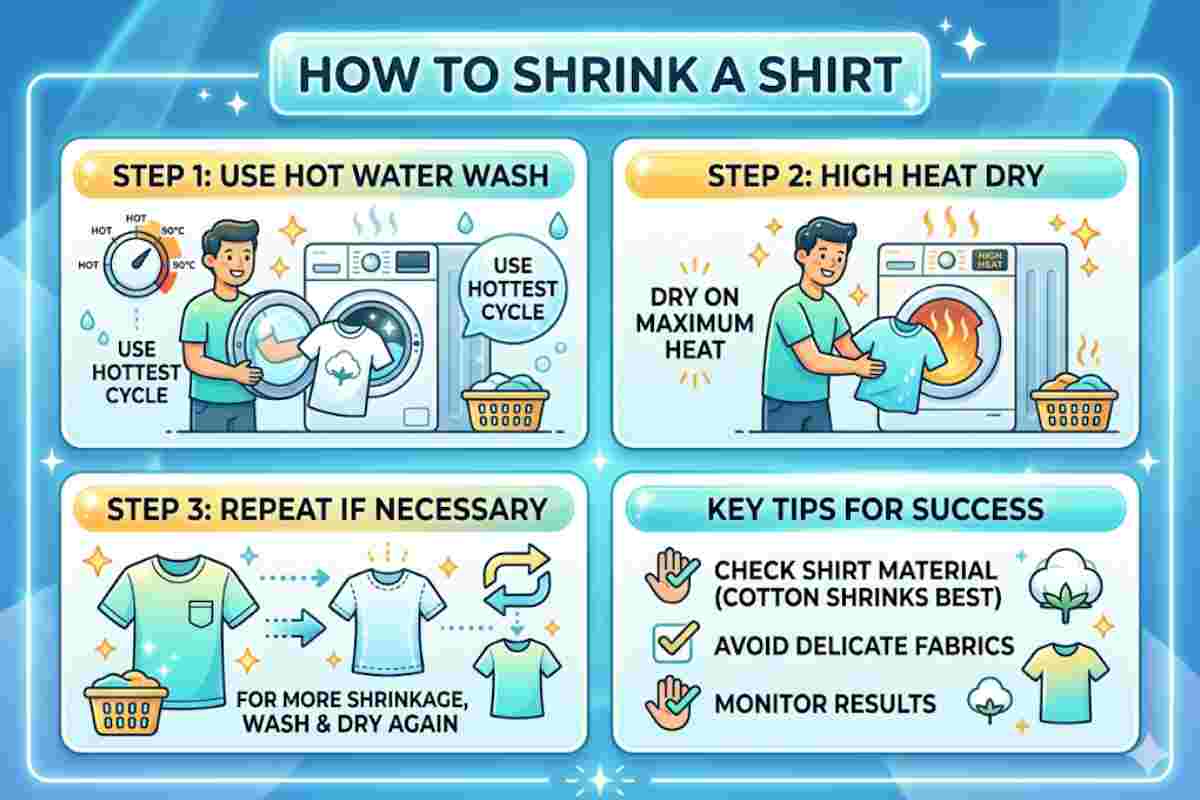
Shrinking a shirt might sound tricky, but it’s actually simple when you understand how different fabrics react to heat and moisture. Whether your shirt is too loose or stretched out, this guide will show you safe, proven ways to shrink it at home without ruining it.
Shrinking a shirt is possible using heat (hot water + high dryer heat), but results depend on fabric type. Cotton shrinks easily, polyester resists heat, and blends require careful handling. Follow controlled methods to avoid over-shrinking or damaging the fabric.
Table of Contents
What Causes Shirts to Shrink?
Shirts shrink due to heat and agitation, which tighten the fibers in the fabric. The key factors include:
- High temperature (water or air)
- Fabric composition (cotton vs synthetic)
- Drying method (machine vs air dry)
Natural fibers like cotton shrink more easily, while synthetic fabrics resist shrinking.
Fabric Types & Shrinkability
| Fabric Type | Shrink Potential | Best Method | Risk Level |
| Cotton | High | Hot wash + high heat dry | Medium |
| Polyester | Low | Heat + repeated drying | Low |
| Cotton Blend | Medium | Moderate heat control | Medium |
| Wool | High | Hot water + agitation | High |
| Linen | Medium-High | Hot wash + air dry control | Medium |
Method 1: Washing Machine + Dryer (Most Effective)
This is the easiest and most reliable way to shrink a shirt.
Steps:
- Turn the shirt inside out
- Wash in hot water cycle
- Transfer immediately to dryer
- Dry on high heat setting
- Check size after one cycle (repeat if needed)
Best For:
- Cotton shirts
- Oversized casual wear
Tip: Don’t overdo it—shrinking too much can make the shirt unwearable.
Method 2: Boiling Water Method (Maximum Shrink)
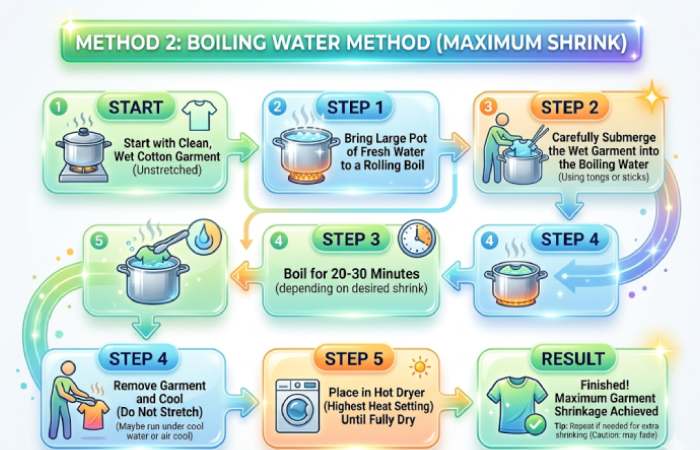
If you need more aggressive shrinking:
Steps:
- Boil water in a pot
- Turn off heat and submerge the shirt
- Leave for 5–20 minutes
- Remove carefully and let cool
- Dry on high heat
Results:
- Maximum shrink in one attempt
- Great for thick cotton fabrics
Risk: Can damage prints, colors, or stitching
Method 3: Spot Shrinking (Targeted Fit Adjustment)
Perfect if only certain areas (like sleeves or waist) need shrinking.
Steps:
- Spray water on specific areas
- Use a hair dryer on high heat
- Focus heat until area tightens
Best For:
- Tailoring fit without shrinking entire shirt
Method 4: Iron Shrinking Technique
Steps:
- Dampen the shirt slightly
- Use a hot iron
- Press firmly on areas you want to shrink
Works Best On:
- Cotton blends
- Minor adjustments
How to Shrink Different Shirt Types (T-Shirts, Dress Shirts, Polos)
| Shirt Type | Common Fabric | Shrink Difficulty | Best Shrinking Method | Recommended Temperature | Time Required | Risk Level | Special Tips |
| T-Shirts | 100% Cotton / Blends | Easy | Hot wash + high heat dryer | 40–60°C wash, high dry | 1–2 cycles | Medium | Turn inside out to protect prints |
| Dress Shirts | Cotton / Polyester | Moderate | Warm wash + medium dryer heat | 30–40°C wash | 1 cycle | Medium | Avoid high heat to prevent collar damage |
| Polo Shirts | Cotton / Piqué | Easy–Moderate | Hot wash + medium heat drying | 40–50°C wash | 1 cycle | Medium | Reshape collar after drying |
| Oversized Tees | Cotton | Easy | Boiling water + high heat drying | Boiling (~100°C) | 20–30 mins | High | Monitor closely to avoid over-shrink |
| Athletic Shirts | Polyester / Spandex | Difficult | High heat drying (multiple cycles) | Low–medium wash | 2–3 cycles | Low | Expect minimal shrinkage |
| Linen Shirts | Linen | Moderate | Warm wash + air dry | 30–40°C wash | 1 cycle | Medium | Avoid dryer to prevent wrinkles |
| Blended Shirts | Cotton + Polyester | Moderate | Hot wash + medium dryer | 40–50°C wash | 1–2 cycles | Medium | Shrinks less than pure cotton |
| Wool Shirts | Wool | Very Easy | Hot wash + agitation + air dry | Warm–hot wash | 1 cycle | High | Can shrink dramatically—handle carefully |
How to Fix a Shirt That Shrunk Too Much (Step-by-Step Guide)
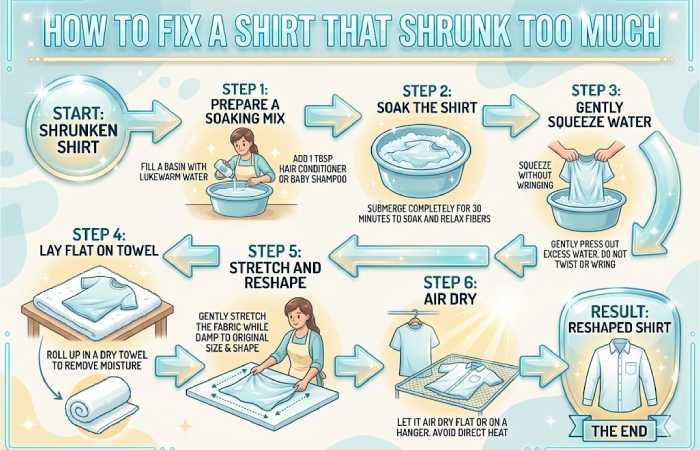
Accidentally shrinking your favorite shirt can feel frustrating—but in many cases, you can partially or even fully restore its size using simple at-home methods. The key is to relax the fabric fibers and gently stretch them back into shape.
Why Shirts Shrink (And How to Reverse It)
Shrinking happens when heat tightens fabric fibers. To fix it, you need to:
- Relax fibers using water + conditioner
- Gently stretch the fabric back
- Let it dry in the correct shape
Method 1: Baby Shampoo or Hair Conditioner Soak (Most Effective)
This is the most recommended and safest method.
Steps:
- Fill a basin with lukewarm water
- Add 1–2 tablespoons of baby shampoo or hair conditioner
- Soak the shirt for 20–30 minutes
- Gently squeeze (don’t rinse completely)
- Lay the shirt flat on a towel
- Slowly stretch it back to original size
- Let it air dry flat
Why it works:
Conditioner helps relax cotton and knit fibers, making them easier to reshape.
Method 2: Towel Stretch Technique
Steps:
- After soaking, place shirt on a flat towel
- Roll the towel with the shirt inside
- Press to remove excess water
- Unroll and gently stretch areas (length, sleeves, width)
- Air dry flat
Best for maintaining even shape and avoiding distortion.
Method 3: Steam + Stretch Method
Steps:
- Hang the shirt
- Use a garment steamer or steam from an iron
- Gently pull fabric while steaming
Best For:
- Minor shrinkage
- Cotton blends and delicate fabrics
Method 4: Wear-and-Stretch Method
Steps:
- Dampen the shirt slightly
- Wear it while it dries
Your body helps naturally stretch it back to fit.
Works best for slight shrinkage only
Fabric-Specific Fix Guide
| Fabric Type | Can It Be Fixed? | Best Method | Difficulty |
| Cotton | Yes | Conditioner soak + stretch | Easy |
| Polyester | Limited | Steam + gentle stretch | Medium |
| Cotton Blends | Partial | Soak + controlled stretching | Medium |
| Wool | Yes (carefully) | Conditioner soak (very gentle) | Hard |
| Linen | Partial | Steam + reshape | Medium |
Common Mistakes to Avoid
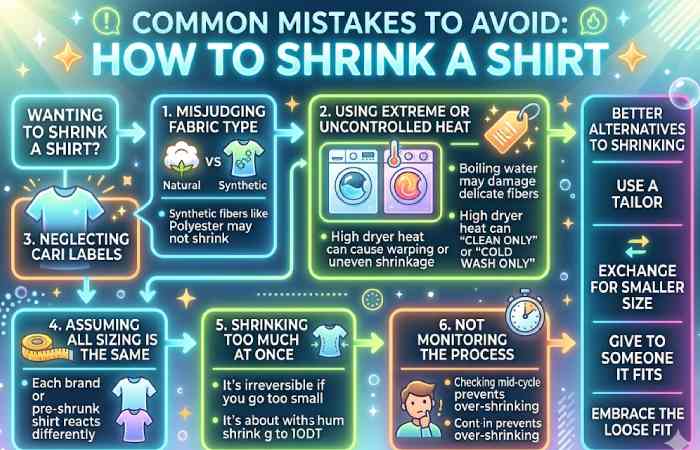
- Using high heat on delicate fabrics
- Shrinking without checking fabric label
- Over-drying (causes stiffness and damage)
- Ignoring color fading risks
Pros and Cons of Shrinking a Shirt
| Pros | Cons |
| Saves money | Risk of over-shrinking |
| Quick DIY solution | Fabric damage possible |
| Custom fit at home | Not reversible |
| Works on most cotton items | Uneven shrinkage risk |
Country-Wise Laundry Services (Shirt Resizing Options)
If DIY isn’t ideal, professional laundry or tailoring services can help.
| Country | Service Type | Avg Price (Shirt Shrink/Alter) | Resource Link |
| India | Laundry/Tailoring | ₹100 – ₹300 | https://www.uclean.in |
| USA | Alteration Service | $5 – $15 | https://www.rinse.com |
| UK | Dry Cleaning | £4 – £12 | https://www.timpson.co.uk |
| Australia | Laundry Service | AUD 8 – AUD 20 | https://www.laundrylady.com.au |
| Canada | Alteration Shops | CAD 7 – CAD 18 | https://www.presscleaners.com |
DIY vs Professional Shrinking
| Factor | DIY Method | Professional Service |
| Cost | Free–Low | Moderate |
| Control | Medium | High |
| Risk | Higher | Lower |
| Precision | Limited | Accurate fit |
| Time | Immediate | 1–2 days |
Pro Tips for Best Results
- Always check the label first
- Shrink gradually (don’t rush)
- Test on older shirts before new ones
- Use medium heat first, then increase
- Air dry after shrinking to stabilize size
FAQ
- Can you shrink a shirt that is 100% polyester?
Polyester resists shrinking, but repeated high heat cycles can slightly reduce size.
- How much can a cotton shirt shrink?
Typically 5%–20%, depending on fabric quality and heat exposure.
- Can you reverse a shrunk shirt?
Partially, using fabric stretching and conditioner soaking—but results vary.
- Is boiling better than washing?
Boiling gives faster results but carries higher risk of damage.
- Will shrinking fade colors?
Yes, especially with high heat and repeated washing.
Final Conclusion
Learning how to shrink a shirt is a practical skill that helps you fix sizing issues without spending extra money. Whether you use a washing machine, boiling method, or targeted heat techniques, the key is understanding your fabric and applying heat carefully. For best results, shrink gradually and test methods to avoid damage.