
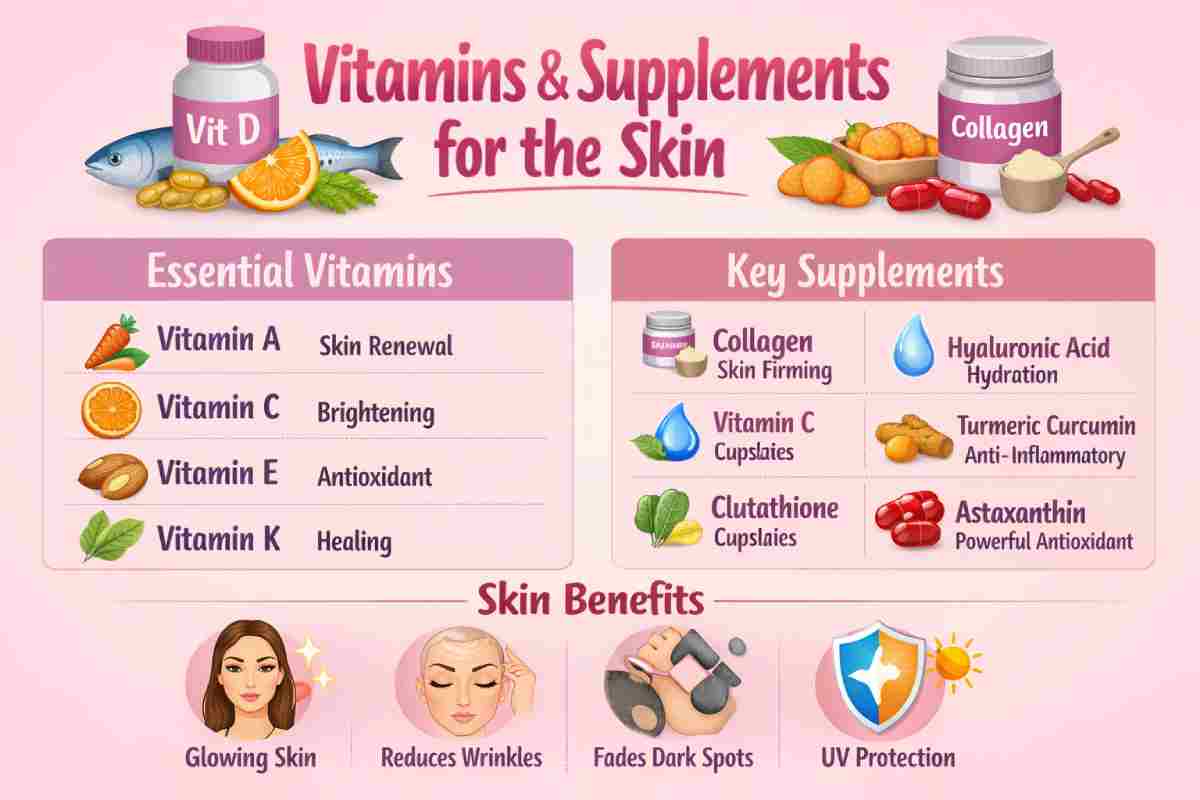
Skin doesn’t necessarily glow, but radiant skin does not come only from the usage of cosmetics. Nowadays, the science of dermatology states with confidence, that it is nutrition, micro-nutrients and bioactive supplements that will determine if your skin looks youthful, hydrated, transparent and durable. The internal nutrition affects the structure, elasticity, hydration and pigment of the skin, while it increases its healing ability and protection against ageing and damages of the environment.
This study guide will examine innovative vitamins, minerals, anti-oxidants, botanical extracts, probiotics and nutricosmetic preparations that improve skin appearance, their dosages in clinical trials, sciences related to absorption, symptoms of deficiences, indications of use and prices.
Table of Contents
Why Internal Nutrition Matters for Skin Health
Skin cells regenerate every 28–40 days. Without proper nutrients, this regeneration process slows down, resulting in:
- Dull complexion
- Uneven skin tone
- Wrinkles & fine lines
- Acne & breakouts
- Hyperpigmentation
- Dryness & inflammation
- Slower wound healing
Topical skincare treats only surface symptoms, while nutritional supplementation treats skin at the cellular level.
Vitamins for Skin Health
Vitamin A
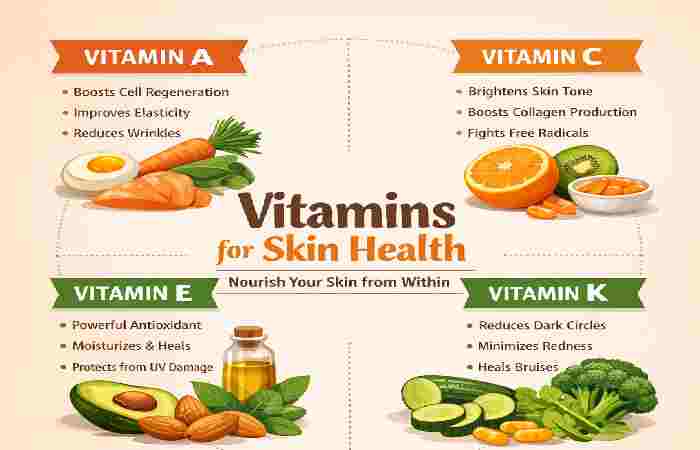
Our body doesn’t produce Vitamin A, so we need to ingest it from our diet. Vitamin A heightens the action of the enzymes and promotes the division of the skin cells (regeneration), making skin look better. Cosmetics that contain Vitamin A allow for a more toned skin and promote the regeneration of prematurely aged skin, keeping it young, smooth and velvety.
Vitamin E
Vitamin E is an integral component of the body’s cells structure and increases our defense capacity, preserving the degeneration of cells. Generally, Vitamin E is known as “the beauty vitamin.” Vitamin E is added to cosmetics to promote the dermis’ microcirculation, better nourishing skin and keeping it elastic and minimizing wrinkles. It’s also necessary to reduce the effects of inflammation, it helps to minimize scarring and protect from ultraviolet radiation.
Vitamin C
The skin is a multifunctional organ, the largest in the body, and its appearance generally reflects the health and effectiveness of its underlying structures. The primary function is to provide a protective interface between the external environment and the individual’s tissues. Protecting it from chemical threats, pathogens, ultraviolet radiation, and even dehydration.
Actual in continuous contact with the external environment, the skin is more damaged than most of our other organs, and it is where the first visible signs of the elderly happen.
Normal skin covers high concentrations of vitamin C, which supports essential and well-known functions, stimulating collagen synthesis. And also aids antioxidant protection against solar radiation-induced photodamage to the skin.
Vitamin C helps even skin tone and reduces the appearance of dark circles. This is ideal for those who are tired of hiding dark circles under their eyes and want to enjoy a younger, brighter, more vibrant appearance.
Vitamin K
Vitamin K is a soothing agent that decongests and relieves the dermis’s redness and irritation and naturally revitalizes the skin. And vitamin K is very effective in treating atopic dermatitis.
Vitamin K includes healing and anticoagulant properties widely used in cosmetic creams. And vitamin K is highly recommended to treat and prevent bruises and also bruises. As it contains properties that improve blood coagulation.
Biotin
Biotin, also known as vitamin B7, contributes to the skin’s beauty since it acts in multiple ways on the skin’s metabolism. Another name for this B-complex component is ‘vitamin H,’ The ‘H’ comes from the German words Haar and Haut, meaning ‘hair and skin.’ For better absorption of biotin. It is recommended to do it through supplements in capsules (the topical route is not very effective).
Biotin works by producing fatty acids that nourish the skin to maintain a clear complexion. It helps manufacture the new prison cell and the normal functioning of the sebaceous glands, resulting in a healthy skin condition. When the outer protective layer of the crust is out of balance, dehydrated skin can manifest.
Essential Additional Vitamins for Skin Health (Beyond A, C, E, K, Biotin)
Vitamin B3 (Niacinamide / Niacin)
Key Benefits:
- Improves skin barrier function
- Reduces redness, inflammation, and acne
- Regulates oil production
- Enhances skin hydration
- Improves pigmentation & dullness
Clinical Dosage: 15–35 mg/day
Best Sources: Fish, poultry, peanuts, whole grains
Supplement Form: Capsules, tablets, powder
Vitamin B5 (Pantothenic Acid)
Key Benefits:
- Enhances wound healing
- Controls excess sebum production
- Reduces acne severity
- Improves skin hydration
Clinical Dosage: 5–10 mg/day
Used Extensively In: Acne-control supplements
Vitamin B12
Key Benefits:
- Supports skin cell metabolism
- Prevents hyperpigmentation
- Improves skin repair
- Maintains healthy blood flow to skin
Clinical Dosage: 2.4 mcg/day
Deficiency Signs: Dark patches, dryness, dullness
Vitamin D (Hormonal Skin Regulator)
Key Benefits:
- Regulates skin immunity
- Controls eczema & psoriasis
- Enhances skin barrier strength
- Supports antimicrobial defense
Clinical Dosage: 800–2000 IU/day
Deficiency Symptoms: Dry skin, slow healing, eczema flare-ups
Essential Minerals for Healthy Skin
Zinc
Key Benefits:
- Acne control
- Sebum regulation
- Wound healing
- Antibacterial protection
Dosage: 10–25 mg/day
Selenium
Key Benefits:
- Antioxidant protection
- UV damage protection
- Skin elasticity support
Dosage: 55–100 mcg/day
Copper
Key Benefits:
- Collagen formation
- Skin firmness
- Pigmentation regulation
Dosage: 900 mcg/day
Supplements for Skin Health
Collagen
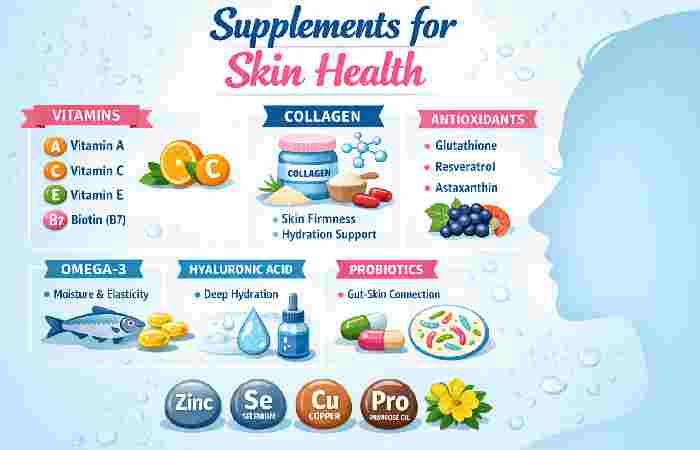
Collagen is the most overflowing protein in the body, its primary function being to provide support and structure. It finds in different connective tissues, such as skin, bone, cartilage, and tendons. It widely use in the medical and food industries.
Hydrolyzed collagen is the product of enzymolysis of collagen or gelatin, and they use as critical active components due to their various bioactivities, high bioavailability, and good biocompatibility.
Curcumin
Turmeric (Curcuma longa), a spice commonly used throughout the world, has show to have anti-inflammatory, antimicrobial, antioxidant, and also anti-neoplastic properties. Mounting evidence shows that an active component of turmeric, curcumin, can use medically to treat various dermatological conditions.
Astaxanthin
The naturally occurring carotenoid found in crustacean species such as shrimp, crab and fish species such as salmon, sea bream. It is reported that astaxanthin activity on anti-inflammatory effect has linked to better in lifestyle-related disease and also wellness through its antioxidants properties.
Hyaluronic Acid
Hyaluronic acid( sodium hyaluronate) is naturally occurring glycosaminoglycan. Glycosaminoglycans is a kind of polysaccharides which consist in connective tissue and it is also the essential element of the extracellular matrix; tissue that supports cell structure.
Evening Primrose Oil
Evening primrose oil is a beneficial and therapeutic oil derived from the seed of Oenothera Biennis. The chemical constituents are composed of Linoleic Acid (Omega-6), Linolenic Acid (Omega-6), Oleic Acid (Omega-9), Palmitic Acid and Stearic Acid.
Advanced Skin Supplements (Nutricosmetics)
Ceramides
Function: Skin hydration + barrier strengthening
Effect: Improves moisture retention & reduces dryness
Clinical Dose: 20–40 mg/day
Glutathione
Function: Skin brightening + detoxification
Effect: Reduces pigmentation & oxidative damage
Dose: 250–1000 mg/day
Resveratrol
Function: Anti-aging polyphenol
Effect: Reduces wrinkles, increases skin elasticity
Dose: 100–500 mg/day
Coenzyme Q10 (CoQ10)
Function: Cellular energy + antioxidant
Effect: Reduces fine lines, improves skin texture
Dose: 100–300 mg/day
Probiotics for Skin
Function: Gut-skin axis balance
Effect: Reduces acne, eczema, rosacea
Strains: Lactobacillus rhamnosus, Bifidobacterium
Best Supplements for Specific Skin Problems
| Skin Concern | Best Supplements |
| Acne | Zinc, Vitamin B5, Probiotics, Niacinamide |
| Dark Spots | Vitamin C, Glutathione, Niacinamide |
| Wrinkles | Collagen, CoQ10, Astaxanthin |
| Dry Skin | Hyaluronic Acid, Ceramides, Omega-3 |
| Dull Skin | Vitamin C, Biotin, Selenium |
| Eczema | Vitamin D, Omega-3, Probiotics |
| Sun Damage | Astaxanthin, Vitamin E, Lycopene |
Clinical Dosage Guide for Skin Supplements
| Supplement | Daily Dose Range |
| Vitamin C | 500–2000 mg |
| Vitamin E | 100–400 IU |
| Biotin | 5000–10000 mcg |
| Collagen Peptides | 5–15 grams |
| Hyaluronic Acid | 120–240 mg |
| Glutathione | 250–1000 mg |
| Astaxanthin | 4–12 mg |
| Zinc | 10–25 mg |
How Long Do Supplements Take to Show Results?
| Benefit | Visible Results |
| Skin Hydration | 7–14 days |
| Acne Improvement | 2–4 weeks |
| Glow & Brightening | 3–6 weeks |
| Wrinkle Reduction | 8–12 weeks |
| Pigmentation Fading | 6–12 weeks |
Skin Supplement Price (Country-wise)
India – Skin Supplement Prices (2026)
| Supplement | Avg Monthly Price (₹) | Resource Link |
| Collagen Powder | ₹850 – ₹2,200 | https://www.amazon.in/s?k=collagen+supplement |
| Vitamin C Capsules | ₹300 – ₹900 | https://www.healthkart.com/s/vitamin-c |
| Biotin Capsules | ₹250 – ₹600 | https://www.amazon.in/s?k=biotin+supplement |
| Glutathione Capsules | ₹1,200 – ₹3,500 | https://www.1mg.com/search/all?name=glutathione |
| Hyaluronic Acid Capsules | ₹900 – ₹2,800 | https://www.flipkart.com/search?q=hyaluronic+acid+capsules |
USA – Skin Supplement Prices (2026)
| Supplement | Avg Monthly Price ($) | Resource Link |
| Collagen Peptides | $25 – $60 | https://www.amazon.com/s?k=collagen+supplement |
| Vitamin C Capsules | $8 – $25 | https://www.iherb.com/search?kw=vitamin+c |
| Biotin Supplements | $10 – $30 | https://www.walmart.com/search?q=biotin+supplement |
| Glutathione | $30 – $80 | https://www.iherb.com/search?kw=glutathione |
| Hyaluronic Acid | $18 – $55 | https://www.amazon.com/s?k=hyaluronic+acid+capsules |
UK – Skin Supplement Prices (2026)
| Supplement | Avg Monthly Price (£) | Resource Link |
| Collagen Powder | £20 – £55 | https://www.boots.com/search?searchTerm=collagen |
| Vitamin C Tablets | £6 – £20 | https://www.hollandandbarrett.com/search/?q=vitamin+c |
| Biotin Capsules | £8 – £22 | https://www.boots.com/search?searchTerm=biotin |
| Glutathione | £25 – £65 | https://www.amazon.co.uk/s?k=glutathione |
| Hyaluronic Acid | £15 – £45 | https://www.hollandandbarrett.com/search/?q=hyaluronic+acid |
Australia – Skin Supplement Prices (2026)
| Supplement | Avg Monthly Price (AUD) | Resource Link |
| Collagen Peptides | AUD 30 – 95 | https://www.chemistwarehouse.com.au/search?searchtext=collagen |
| Vitamin C Capsules | AUD 10 – 30 | https://www.chemistwarehouse.com.au/search?searchtext=vitamin+c |
| Biotin Tablets | AUD 12 – 35 | https://www.amazon.com.au/s?k=biotin |
| Glutathione | AUD 40 – 110 | https://www.iherb.com/search?kw=glutathione |
| Hyaluronic Acid | AUD 20 – 70 | https://www.chemistwarehouse.com.au/search?searchtext=hyaluronic+acid |
UAE – Skin Supplement Prices (2026)
| Supplement | Avg Monthly Price (AED) | Resource Link |
| Collagen Supplements | AED 80 – 260 | https://www.amazon.ae/s?k=collagen |
| Vitamin C Capsules | AED 25 – 90 | https://www.lifepharmacy.com/search?q=vitamin+c |
| Biotin Capsules | AED 30 – 110 | https://www.amazon.ae/s?k=biotin |
| Glutathione | AED 120 – 350 | https://www.noon.com/uae-en/search?q=glutathione |
| Hyaluronic Acid | AED 60 – 220 | https://www.lifepharmacy.com/search?q=hyaluronic+acid |
Global Skin Supplement Cost Comparison (Quick Overview)
| Country | Monthly Cost Range |
| India | ₹250 – ₹3,500 |
| USA | $10 – $80 |
| UK | £6 – £65 |
| Australia | AUD 12 – 110 |
| UAE | AED 25 – 350 |
How to Choose the Best Skin Supplement (Buyer’s Guide)
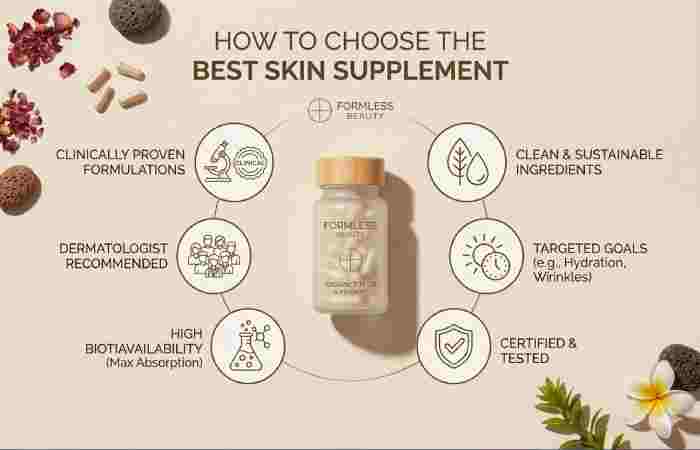
- Look for clinical dosages
- Choose bioavailable forms
- Prefer third-party tested products
- Avoid artificial colors & fillers
- Check GMP, ISO, FSSAI certification
Safety, Side Effects & Drug Interactions
| Supplement | Possible Side Effects |
| Vitamin A | Toxic at high doses |
| Zinc | Nausea, stomach upset |
| Biotin | Rare acne flare-ups |
| Glutathione | Mild bloating |
| Collagen | Fullness, indigestion |
Pregnant women, lactating mothers, and individuals with medical conditions should consult doctors before supplementation.
Natural Food Sources vs Supplements – Which Is Better?
| Factor | Food | Supplements |
| Absorption | Medium | High |
| Dosage Control | Hard | Easy |
| Convenience | Low | High |
| Clinical Effect | Moderate | Strong |
Combination of both yields best results.
Frequently Asked Questions (FAQ)
Can vitamins really improve skin?
Yes. Clinical studies confirm collagen synthesis, hydration improvement, antioxidant protection, and pigmentation control.
How long should supplements be taken?
Minimum 3 months continuous usage for visible transformation.
Can teenagers take skin supplements?
Yes — but under medical supervision, especially acne-related supplements.
Are beauty gummies effective?
Yes, but capsules and powders provide higher potency.
Final Thoughts
The importance of skin vitamins and supplements cannot be underestimated and are becoming a must have for both healthy and beautiful looking skin for years to come and can help maintain anti-aging skin properties. Coupled with good nutrition, adequate hydration, sunscreen and good skin care practices they are fantastic at helping nourish the cells of our skin from within.