
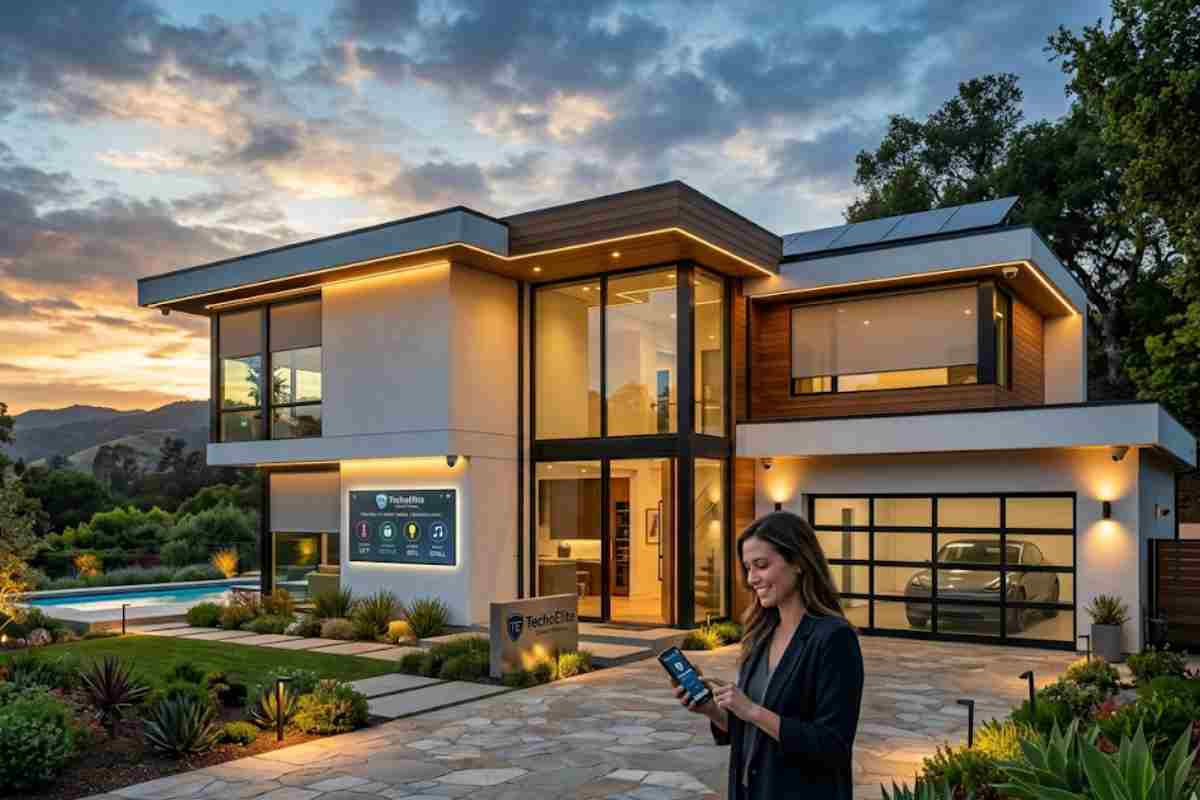
The new trend of smart-home and ai technology makes all our modern houses transformation from ancient living rooms to most intelligent digital campus. It‘s where everything on our campus can be controlled, including security, entertainment, energy, ease and life levels, makes American luxury-life standard.
Industry, consumer, and trade publications now report using the term “smart home” to describe developments in “connected living.” Increasingly, automation systems integrate lighting, air conditioning, water, security, entertainment and appliances. This move has made the smart-home a sizable part of the lifestyle business, rather than merely a technological innovation.
TechoElite Smart Homes are often used to describe a network of smart homes involved with an internet-connected system, home automation powered by AI, intelligent security, and lifestyle technology currently being integrated into new house construction and renovation, offering increased daily comforts, energy savings, convenience, and quality of digital life.
Instead of the development of isolated devices, the idea in a world of smart living is to interconnect many technologies in order to give automated and intelligent environments.
Table of Contents
What Is TechoElite Smart Homes?
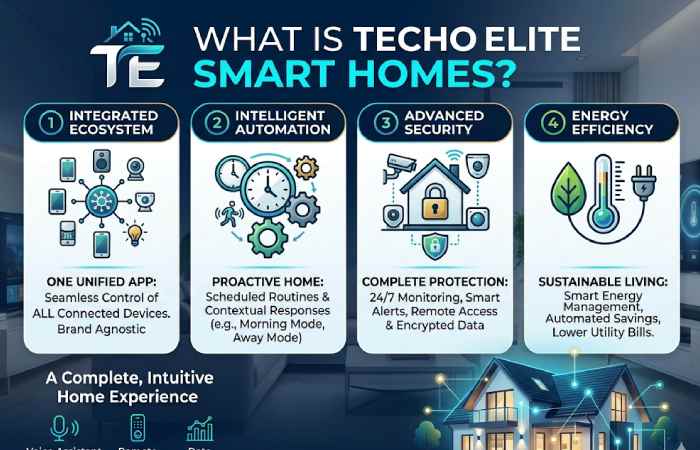
These are emerging interconnected living systems that offer to automate all functions of daily life using AI, Cloud and/IOT enabled devices.
Modern smart-home ecosystems commonly integrate:
- Smart lighting systems
- Intelligent home security
- Automated climate control
- Voice-command assistants
- Connected entertainment devices
- Remote appliance management
In contrast to traditional technology, where devices are used by individuals separately, the smart home emphasizes the integration and control of these devices, for instance through automation.
This facilitates more seamless living where homeowners are able to access a plethora of systems fromsmartphone, tablet, or a voice interface.
And the main aim should be to develop intelligent living environments that enhance:
- Convenience
- Security
- Energy efficiency
- Lifestyle comfort
- Automation efficiency
As connected technology becomes more sophisticated, the smart-home ecosystem continues to grow through all wealth segments in luxury residences, condos and newer residential developments across the nation.
How Smart Homes Work in Modern Living Environments
Smart homes involve connected technologies talking to each other over Internet enabled systems and central automation platform.
IoT Device Communication
Smart-home systems function using the internet of things where all the devices within the ecosystem are communicating with each other and adjusting the operations based on data from the user or system.
Examples include:
- Motion sensors activating lights
- Heated rooms changing temperature by a smart thermostat
- Camera security alert to mobile
- Voice assistants controlling appliances
AI Automation Systems
Agh, artificial intelligence adds to automation by learning homeowner habits and adjusting the device for maximum efficiency.
AI systems can:
- Learn daily schedules
- Predict lighting preferences
- Optimize temperature settings
- Improve energy efficiency
- Detect unusual activity
Cloud-Connected Home Control
Cloud integration enables users to control system from anywhere through mobile app. Or through central dashboard, mobile or any other device.
This enables:
- Remote security monitoring
- Appliance management
- Smart notifications
- Device synchronization
App-Based Smart Management
Many connected-home systems operate through centralized smartphone applications that allow users to:
- Control devices
- Create automation routines
- Monitor energy usage
- Receive alerts
- Adjust security settings
This convenience plays a considerable part in today‘s digital life.
Core Features Associated With TechoElite Smart Homes
Smart Lighting Automation
Smart lighting provides greater convenience and better energy management.
Key features include:
- Voice-controlled lighting
- Motion-activated illumination
- Scheduled lighting routines
- Brightness customization
- Energy optimization
Smart Lighting Cost Comparison
| Smart Lighting Product | Estimated Price Range (USD) | Main Benefit | Resource Link |
| Smart LED Bulbs | $20 – $80 | Energy efficiency | Philips Hue |
| Smart Light Switches | $40 – $150 | Automated control | Lutron |
| Smart Lighting Systems | $200 – $1,500 | Whole-home automation | GE Lighting Cync |
Intelligent Home Security
Home security continues to be one of the most important smart-home categories.
Connected security systems may include:
- Smart cameras
- Motion detectors
- Doorbell cameras
- Remote surveillance
- Smart locks
Smart Security Pricing
| Security Device | Estimated Price Range (USD) | Main Function | Resource |
| Smart Doorbell Cameras | $80 – $350 | Visitor monitoring | Ring |
| Smart Security Cameras | $100 – $600 | Remote surveillance | Arlo |
| Smart Locks | $150 – $450 | Keyless entry | August Home |
Climate and Energy Management
Smart climate systems allow homeowner to further reduce energy waste while improving comfort levels indoors.
Features often include:
- Automated temperature adjustment
- Smart thermostats
- Energy tracking
- Climate scheduling
- Eco-mode optimization
Smart Thermostat Pricing
| Device Type | Estimated Price Range (USD) | Energy Benefit | Resource Link |
| Smart Thermostats | $120 – $350 | Energy optimization | Google Nest |
| Smart HVAC Systems | $1,500 – $5,000 | Whole-home climate control | Ecobee |
Voice Assistant Integration
Voice-command ecosystems ease the use of devices with a common AI assistant.
Popular integrations include:
- Alexa compatibility
- Google Assistant support
- Apple HomeKit ecosystems
- Voice-controlled routines
Voice assistants offers the capability for consumers to use voice to operate several smart-home systems.
Connected Entertainment Systems
Entertainment automationIncreases enjoyable digital lifestyle experiences through integrated media systems.
Connected entertainment features may include:
- Multi-room audio
- Smart TVs
- Centralized media control
- Voice-controlled streaming
- Integrated speaker systems
Smart Entertainment Pricing
| Entertainment System | Estimated Price Range (USD) | Main Feature | Resource |
| Smart TVs | $400 – $3,000 | Connected streaming | Samsung Smart TVs |
| Multi-Room Speakers | $150 – $1,200 | Whole-home audio | Sonos |
| Smart Streaming Systems | $50 – $500 | Media integration | Roku |
How Smart Homes Improve Everyday Lifestyle Convenience
Smart-home ecosystems seek to make people‘s everyday life easier and more comfortable and more efficient.
Benefits include:
- Automated morning routines
- Remote appliance control
- Voice-based task management
- Personalized lighting settings
- Smart climate adjustment
For example, homeowners can create automation routines where:
- Lights gradually illuminate in the morning
- Coffee machines activate automatically
- Thermostats adjust before arrival
- Security Systems recharged by in the Night
These automations save on labor, but enhance ease.
Who Gets the Most Use from the Smart-Home Technologies?
Working Professionals
Time Pressed for time, time-conscious professionals welcome automation systems that make it easier and faster to get things done at home.
Luxury Homeowners
High-end consumers are incorporating smart-home ecosystems into luxury lifestyle experiences.
Families
Household automated and connected security systems increase safety and comfort.
Tech Enthusiasts
Technology aficionados tend to be among the early users of smart-home systems to discover the full potential of automation.
Remote Workers
Smart-home offices boost productivity with control over lighting, temperature, and connected workspaces.
Why AI Is Becoming Central to Smart Homes?
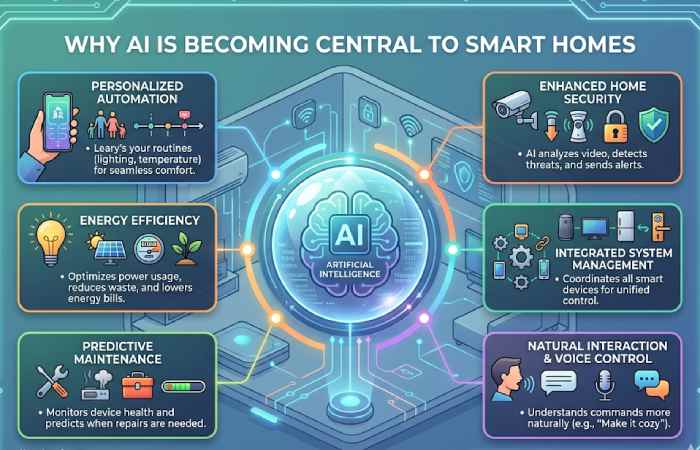
But artificial intelligence is on the point to turn smart homes into predictive systems rather than reactive environments.
AI can now:
- Learn user behavior
- Predict automation preferences
- Detect unusual security activity
- Optimize energy consumption
- Personalize environmental settings
This makes smarter living spaces that automatically respond to the daily lifestyle of the residents.
Another way AI enhances efficiency is in the long term. It can learn from the way the device is used and performance parts accordingly.
TechoElite Smart Homes vs Traditional Home Systems
| Feature | Smart Home Ecosystem | Traditional Home Systems |
| Automation | High | Minimal |
| Remote Control | Available | Limited |
| Energy Optimization | Strong | Manual |
| AI Integration | Yes | No |
| Voice Commands | Supported | Unavailable |
| Connected Devices | Extensive | Minimal |
Connected-home solutions offer much more flexibility and automation than a traditional home.
Common Smart-Home Problems Automation Helps Solve
Energy Waste Reduction
Smart thermostats and lighting systems lower wastage in an automatic way.
Home Security Monitoring
Connected security systems enable you to receive updates and monitor your home remotely.
Remote Appliance Management
Device management of others is possible on the road.
Routine Automation
Daily chores may be manageable through automatic planning and voice recognition.
These features enhance both convenience and operational efficiency.
The Growing Smart-Home Market in the USA
The US still sees a significant increase in the adoption of smart- home driven by shifting consumer readiness and more evolved technology ecosystem.
Important growth drivers include:
- Energy-conscious consumers
- Remote-work lifestyles
- AI integration
- Home-security demand
- Luxury-tech adoption
The course state that much of the smart-home market is growing fast across urban and suburban residential developments.
Homeowners today see connected-home technology not just as a lifestyle improvement but as a sound investment.
Benefits of Connected Smart-Home Ecosystems
Better Convenience
Automations helps automate everyday mundane tasks.
Improved Energy Efficiency
Smart systems help to save wastages and helps in better utilization of energy.
Enhanced Security
Unified security systems enhance the security and accountability of monitoring.
Digital Lifestyle Integration
Connected homes: a convergence of technology, comfort and convenience.
How Smart Homes Save Energy Automatically
Smart-home systems enable to reduce power consumption by a smart automations.
Energy-saving features include:
- Motion-based lighting activation
- Smart temperature scheduling
- Automated appliance shutdown
- Adaptive climate control
- Energy usage tracking
The above technologies are useful not only for the protection of our environment, but also for the saving of money over the long-term.
Smart Homes vs Traditional Luxury Homes
| Feature | Smart Homes | Traditional Luxury Homes |
| Automation | Extensive | Limited |
| Energy Efficiency | High | Moderate |
| AI Integration | Advanced | Minimal |
| Remote Monitoring | Available | Rare |
| Connected Ecosystem | Strong | Weak |
Today‘s society demands more from luxury than ever before. Modern luxury is leading to a focus on intelligent features in addition to good looks.
Signs Your Home Is Ready for Automation
Your home may be suitable for smart-home upgrades if you:
- Have reliable Wi-Fi coverage
- Use multiple connected devices
- Want better energy management
- Prioritize security monitoring
- Prefer convenience-driven living
We also benefit from advances in modern infrastructure.
Is Techoelite Smart Homes A Scam?
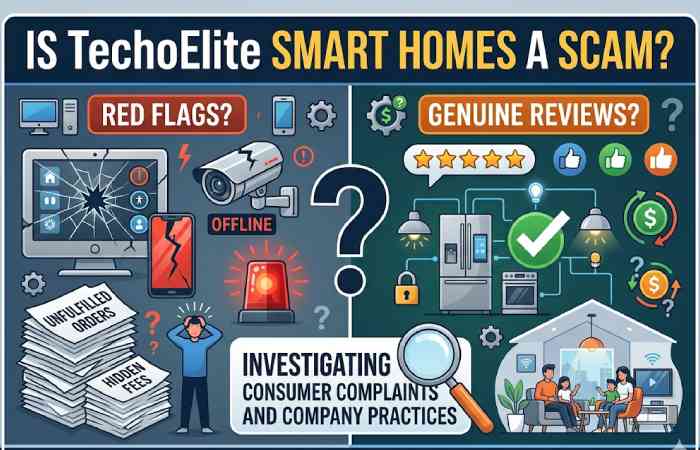
Consumers reviewing smart-home ecosystems need look at transparency, compatibility, and security more than marketing warranties.
Important factors include:
- Device compatibility
- Data privacy protections
- Software update reliability
- Customer support quality
- Installation guidance
- Platform scalability
If a homeowner is considering a large scale automation system, research should be conducted to see what types of smart-homes/economies are out there and what they are capable of doing.
What Homeowners Should Consider Before Installing Smart-Home Systems
There are various factors which prospective buyers should consider before integrating a smart-home system into their home.
| Consideration | Why It Matters |
| Wi-Fi Stability | The function of these smart devices also depends on the robustness of the connections. |
| Privacy Controls | Protects personal data |
| Device Ecosystems | Improves compatibility |
| Scalability | Allows future upgrades |
| Maintenance Support | Ensures long-term reliability |
One benefit of careful planning is to enhance both user experience and automation efficiency over time.
How AI and IoT Are Shaping the Future of Homes
Trends in AI and IoT technologies that define Generation Z homes… Newer IA & IoT technologies that continue to amaze our fantasies.
- Predictive maintenance systems
- AI-driven automation learning
- Intelligent energy grids
- Advanced home-security analytics
- Fully synchronized digital ecosystems
Todays houses are getting smarter to become intelligent worlds that are able to personalize for users depending on human behavior and other environmental factors.
Smart Homes vs Smart Apartments
| Feature | Smart Homes | Smart Apartments |
| Customization | Higher | Moderate |
| Device Control | Extensive | Limited |
| Infrastructure Flexibility | Strong | Restricted |
| Expansion Potential | Greater | Moderate |
| Automation Complexity | Advanced | Moderate |
Most smarthomes also tend to be more flexible as the home owner makes decisions about the infrastructure.
Frequently Asked Questions
What is TechoElite Smart Homes?
It is a connected home – An intelligent home ecosystem, powered by automation, integrated home technology, and contemporary, digital living.
How do they operate?
To automate and control house, smart home uses home automation device, cloud system, artificial intelligence automation and home connected applications.
Energy Efficiency of Smart-home Systems?
Yes. With smart thermostats, smart lighting and automated energy management systems you do save reduce waste.
Is Home Automation Easier with AI?
How AI enhances automation: AI is able to learn the habits of the user, can create efficiencies by optimizing the routines, and can improve the predictive capabilities.
Which tools are trending in smart homes?
Popular devices are smart thermostats, smart lighting, voice-activated assistants, cameras, smart door locks and other connected entertainment systems.
Final Thoughts
TechoElite Smart Homes USA is a manifestation of the global move to intelligent living where automation, artificial intelligence and interconnected device systems find their way into home environments to enhance convenience, security and energy management and digital lifestyle experiences.
With more smart-home technology proliferating throughout the U.S., consumers are coming to see connected living as an indispensable if not a de rigeur component of today‘s definition of mainstream luxury and tomorrow‘s definition of lifestyle planning.
Residential living is becoming smarter, more automated and more personalized all the time.. and connected smart-home ecosystems will be driving this far into the future.