
Heat styling, coloring, and UV damage all make our hair feel dry, broken, or frizz-prone. What a hair mask is, when to use one, and how to apply one correctly for dry, broken, or frizz-prone hair, as well as color-treated, low porosity hair, and 4C curls, along with how many times per week to use hair masks.
Table of Contents
What is a Hair Mask?
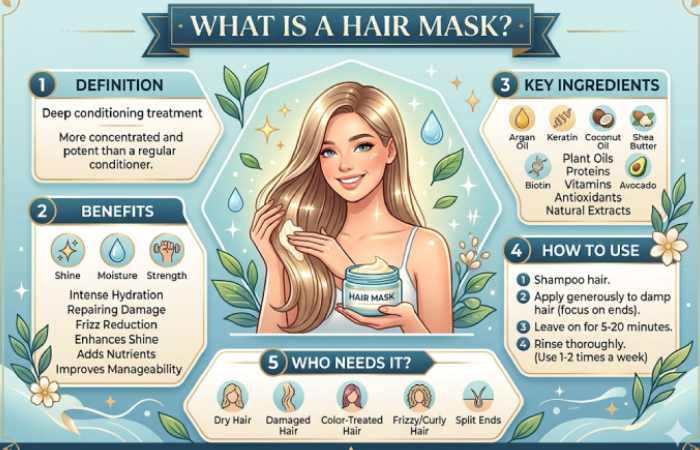
Compared to conditioner you use when you’re in the shower, a mask, or treatment is an extremely high octane hair quencher: they’re rich and intensely moisturizing and full of enriching butters, oils and other goodies for your hair. Hair masks can be used for anything from dry hair, to frizz and damage repairing, to hair care and strengtheners.
Think of a hair mask like a super strength conditioner; an at-home treatment designed to moisturize or smooth or strengthen your hair depending on the mask. While they can’t grow hair at the root they help reduce breakage and you will keep length as the result within your products line.
The Benefits of Hair Masks
Hair masks are found in so many varieties! Similarly to face masks, you apply a hair mask and let it penetrate for a period of time to condition your hair. Some are even enhanced with keratin or a moisture bomb, perfect for severely dry hair.
Which means going above and beyond just shampoo and conditioner; which they actually do with just one use! Below are some of the top advantages of using a hair mask:
- Hydrates severely dry hair: Adds severe moisture to hair that is very dry; butter and oils in a hair mask offer super moisture that makes hair wonderfully soft.
- Repairs hair: proteins and keratin are proteins that will add strength to the most fragile areas, therefore reduce breakages and split ends.
- Fights frizz: smoothing agents will seal down the cuticle so you get frizz-free, sleeker and more manageable hair.
- Color Safe: conditioners will decrease the porosity in the hair and increase shine and protect the color.
- Slip and detangling: the thicker consistency of the formula will provide better slip, less pulling to 4C hair, curls and curly hair especially.
- Instant and visible results: your hair will feel and look softer and smoother within 1-3 uses when used consistently.
Pros and Cons of Using a Hair Mask
| Pros | Cons |
| Provides intensive nourishment and moisture to dry hair | Heavy if used in large quantities |
| Repairs damaged and chemically processed hair | Some can be very costly |
| Enhances shine and silkiness | Effectiveness varies on hair type |
| Minimizes frizz and split ends | Product can build up with overuse/incorrect use |
| Strengthens hair and prevents breakage | Takes longer than using a conditioner |
| Offers deep, long-lasting conditioning | Certain masks aren’t for all hair types |
| Improves texture of hair | Homemade masks may not be as effective |
| Restores hydration | If too much is used hair will appear greasy/limp |
How to Use a Hair Mask: Step-by-Step Instructions
There is no number for how many times per week you should use a hair mask – it completely depends on the type of hair that you have, what state your hair is currently in, and the specific type of hair mask that you are using. Dry or damaged hair may benefit from a weekly mask being applied a few times per week, whereas oil or fine hair would only benefit from it being used once per week so that it is not overpowering the hair.
Environmental conditions and chemical treatments may also affect the frequency required of using hair mask, regardless of how often you are using it, there are few steps you must follow when using a hair mask:
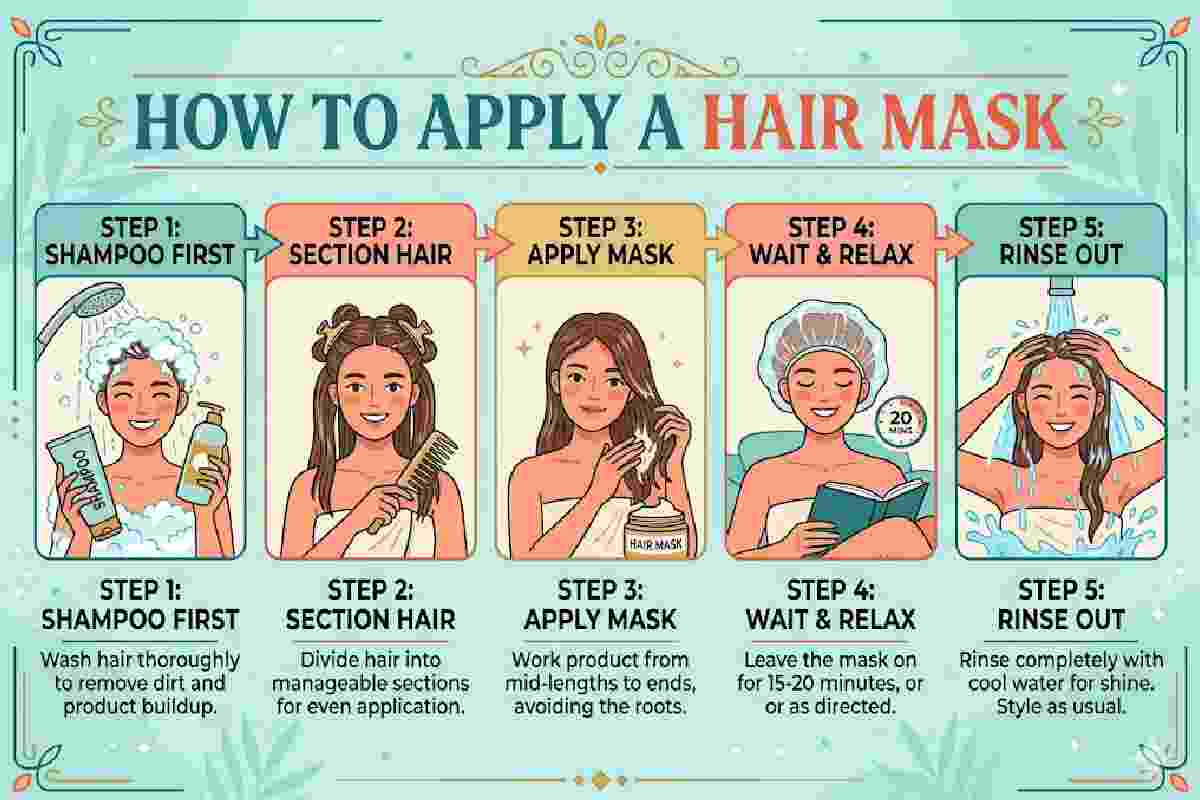
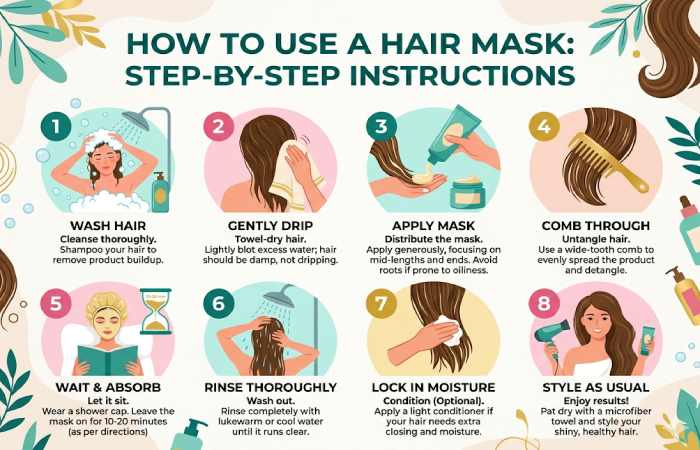
Wash Your Hair
Begin with clean, damp hair so the product can work in. Shampoo to remove any oil and product build up. If you use very heavy styling products, clarifying regularly may be necessary (once every couple of weeks maybe). Squeeze and/or towel blot excess water-masks work best in damp hair.
Apply The Hair Mask
Work in sections. Apply an emulsified (rub a little between your hands) amount starting in the mid lengths and moving towards the ends of your hair and comb through with a wide-tooth comb to distribute.
Let It Soak In
Leave to do its work for the stated time. Conditioning masks are generally quite short; typically between 1-5 minutes but intensive moisture masks and repair masks could be anywhere from 3-5 minutes up to 5-10 minutes. Don’t be tempted to leave it longer for additional benefit.
Rinse Thoroughly
Rinse thoroughly, unless stated it is a leave-in mask. Use cool water to rinse it out to seal in the cuticle and add shine. You usually don’t need to use a regular conditioner before or after a mask.
How Often Should You Use a Hair Mask?
| Hair Condition | Frequency |
| Normal Hair | Once a week |
| Dry/Damaged Hair | 2 times a week |
| Oily Hair | Once every 10–14 days |
Overuse can weigh hair down or cause buildup.
How to Choose the Best Hair Mask for Your Hair Concern
One of the benefits of hair masks is that their formulas target specific hair issues. Hair that is dry, damaged, frizzy or very long has a lot of options, so let’s look at some of your choices.
Match your concern to a mask:
- Dry hair: coconut, shea, banana, papaya or avocado moisturising masks to restore suppleness.
- Damaged hair: strengthening or keratin masks, use them 1 or 2 times a week and it will help strengthen the strands and reduce breakage.
- Frizzy hair or when the air is humid: smoothing masks (containing argan oil or glycerin), use with a frizz controlling serum.
- Color treated hair: color-safe masks which will help the color to stay put, and enhance its shine.
- Fine and/or oily hair: lightweight and quick rinse mask. Avoid putting it on your roots.
- Low-porosity and 4C hair: richer creams and put some heat (or put on a shower cap), it will help penetration of the product.
Hair Masks At Home Vs. At The Salon
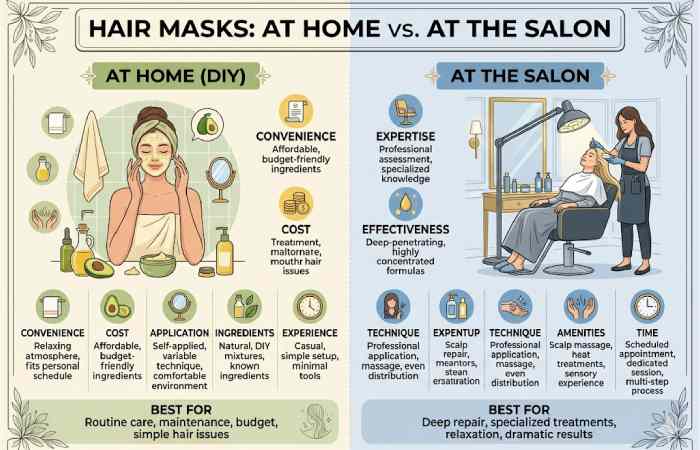
Applying a hair mask at home compared to in the salon should involve the same procedure however, the quality will be varied. The hair mask in the salon will be a professional quality product such as the Metal Detox mask for all hair types. This hair mask is packed full of Glicoamine, a molecule small enough to trace and neutralize metal inside the fiber and it’s a deep hydration, anti-breakage hair mask for all hair types, the professional choice for extremely rescued hair.
Combined as part of the Metal Detox routine the hydrating mask strength with 97% less breakage1, and will deeply nourish your hair for up to 100 hours1. The anti-breakage efficacy is even proven (via instrumental tests) to perform well even in the most severe of tests after 2 consecutive bleaches, after more than 3 colorations, after 8000 brush strokes and after 96 brush strokes with 230C heatstyling tool.
DIY vs Store-Bought Hair Masks (India)
| Type | Example | Price Range | Resource |
| DIY Mask | Coconut Oil + Aloe Vera | ₹100–₹300 | https://www.healthline.com |
| Drugstore | L’Oréal Total Repair 5 Mask | ₹300–₹600 | https://www.nykaa.com |
| Premium | Mamaearth Argan Hair Mask | ₹500–₹900 | https://www.amazon.in |
| Salon Grade | Olaplex Hair Perfector No.3 | ₹2500–₹3500 | https://www.sephora.in |
Hair Masks Do’s and Don’ts
A hair mask, whether it’s a deep condition mask for dry hair or an over night hair mask, can be very effective, but you’ll want to ensure you’re using the right one, and you know the proper way to use it. We’ve gathered our expert approved, professional hair mask do’s and don’ts for you.
Do use the right hair mask
Select the right hair mask for the condition and type of hair. Ask your self if you need a hair mask for dry hair, colored hair, or fine hair before you apply any treatment.
Do apply it correctly
The specifics vary, but the basic guidelines for applying a hair mask will include washing hair and apply, wait and rinse.
Don’t apply to dry hair
Always apply a hair mask to damp, not dry, hair, as applying it dry will result in a messy application and may be somewhat ineffective.
Don’t go overboard
Rethink your hair mask. All you need is enough to spread all through your hair, from the roots to the ends, without overdoing it on the treatment.
Results Timeline: What to Expect
| Time | Result |
| 1st Use | Softer, smoother hair |
| 2–3 Weeks | Reduced frizz |
| 4–6 Weeks | Visible repair and shine |
Consistency is key.
Wrapping Up!
The effects of basic conditioning may bring results, however, hair masks should not be underestimated with regards to its conditioning and restorative benefits. Used as food for the hair, they intensely condition, moisturise and add shine, effectively restoring any dry and frizzy locks.
It is therefore important to master the use of these hair masks in order to obtain their maximal potential. Incorporate the above recommendations and revive your hair with tender love and care, and say hello to luminous and strong tresses.
FAQs
- How much hair mask should be used?
Generally, one fourth a spoonful of the product should be used for short hair, and more for long hair in order to properly distribute the product.
- What should I avoid doing when selecting a hair mask?
For safety of your hair, stay away from those masks made with harsh chemicals. Buy natural ones free of sulphates and parabens.
- Can I use a hair mask for colored hair?
You may apply hair mask to colored hair, but use a hair mask for colored hair.
- Can oily hair use hair masks?
Yes but try to only put them from mid-lengths to the ends, or use a lightweight mask.
- Is a hair mask a replacement for conditioner?
A hair mask is an intensive treatment and should not totally replace your conditioner in your usual hair care regimen.